The Ultimate Rug Sizing Guide: How to Choose the Right Rug for Any Room
How to choose the right rug size and place it correctly
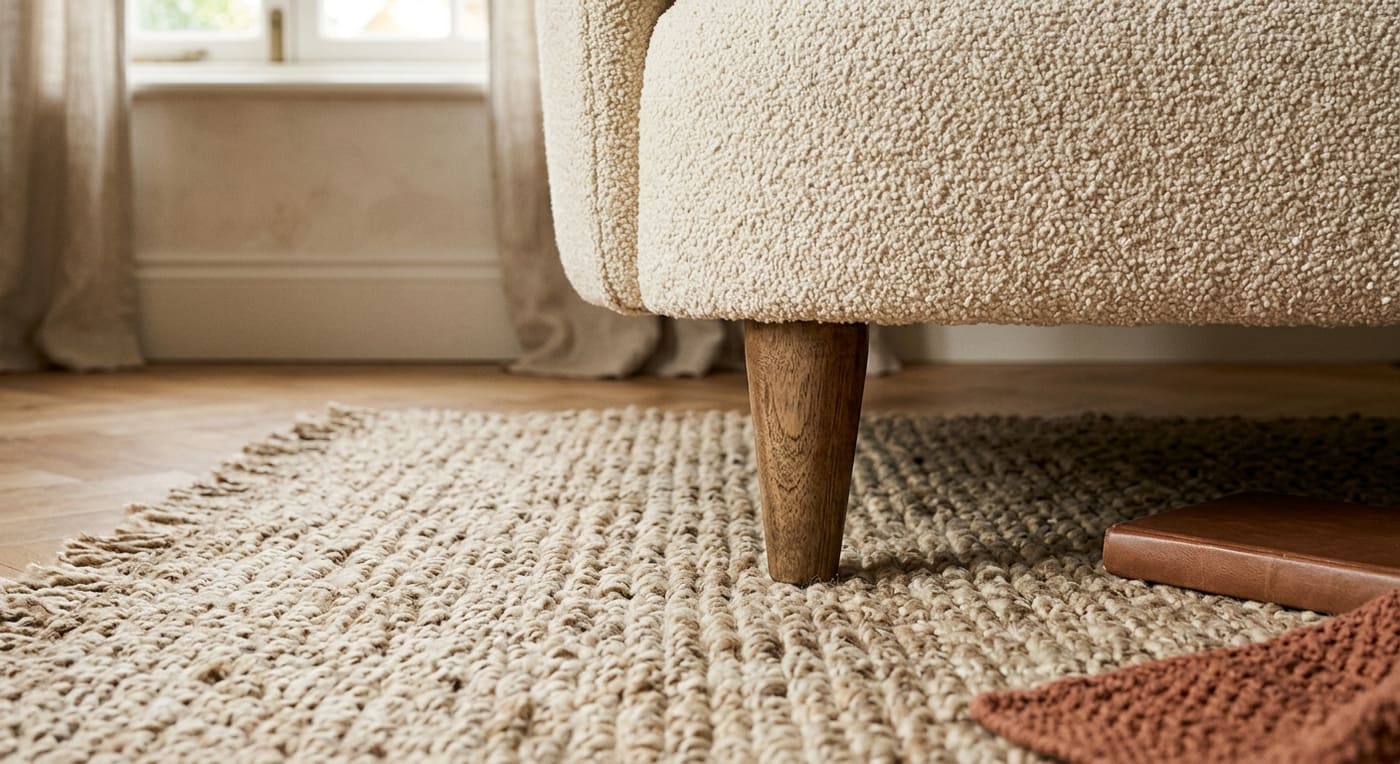
The right rug can make a room feel connected and intentional. The wrong size can make your furniture look disconnected or make the room feel cramped.
The key is to choose your rug based on your furniture arrangement, not just the size of the room.
Standard Rug Sizes
These are common starting points, although exact sizes vary between manufacturers:
| Rug size |
Approx. US size |
Common use |
| 120 × 170 cm |
4 × 6 ft |
Entryways and small areas |
| 140 × 200 cm |
4.5 × 6.5 ft |
Small living rooms and bedrooms |
| 160 × 230 cm |
5 × 7.5 ft |
Smaller living rooms and bedrooms |
| 200 × 290 cm |
6.5 × 9.5 ft |
Living rooms, dining rooms and bedrooms |
| 240 × 340 cm |
8 × 11 ft |
Large living rooms and bedrooms |
| 300 × 400 cm |
10 × 13 ft |
Large rooms and open layouts |
These aren't fixed rules. The best size depends on your furniture and how you want the rug to anchor the space.
3 Rug Placement Rules
1. Anchor the furniture
In a living room, aim to have at least the front legs of the sofa and main chairs on the rug. This visually connects the seating rather than leaving the rug floating underneath the coffee table.
For a larger room, you may prefer a rug large enough to fit the entire seating arrangement.
2. Give dining chairs room to move
A dining rug should extend beyond the table far enough that chairs remain on the rug when pulled out.
A useful starting point is around 60 cm (24 in) beyond the table on each side as a minimum, or 75 cm (30 in) for comfortable chair clearance. Check your actual table and chair dimensions before buying.
3. Leave some floor around the rug
When a rug sits within a room, leaving around 30–45 cm (12–18 in) of visible floor around its edges can create a balanced border.
This is a guideline, not a rule. Room proportions, furniture placement and doorways can change what works best.
Rug Size by Room
Living room: Choose a size that connects the main seating. A small rug may work for a compact seating area, while larger arrangements often need 200 × 290 cm or more.
Dining room: Measure the table and allow enough additional rug space for chairs to be pulled out.
Bedroom: Decide whether you want the rug to extend beneath the entire bed and nightstands or only beneath the lower portion of the bed.
Don't Forget Door Clearance
Before buying a thick or high-pile rug, check nearby doors. A rug beneath a door's swing can prevent it from opening properly.
Measure the gap beneath the door and compare it with the rug's pile height.
Common Mistakes
- Choosing the smallest rug that fits: A rug can technically fit while still looking too small for the furniture.
- Buying before measuring: Measure your sofa, chairs, table and bed, not just the room.
- Ignoring walkways and doors: Make sure the rug doesn't interfere with circulation or door swings.
Pro tip
Use low-tack painter's tape to mark your proposed rug dimensions on the floor. Live with the outline for a while and walk around it. You'll quickly see whether the size feels right.
Frequently Asked Questions
Can a rug be too big?
Yes. A rug can overwhelm a room if it feels cramped against walls or other fixed elements. But there is no universal amount of floor that must remain visible: the proportions of the room matter.
Should all the furniture be on the rug?
Not necessarily. In a living room, having the front legs of the main seating on the rug is a common approach. Larger rooms may benefit from placing the entire seating arrangement on the rug.
What is the most common living-room rug size?
There isn't one universal size. 160 × 230 cm (5 × 7.5 ft) can work for smaller seating areas, while 200 × 290 cm (6.5 × 9.5 ft) or larger is often better for a generous arrangement.
Check Your Rug Size Before You Buy
Use the Nooked Rug Size Calculator to find a suitable starting size.
Then build your room to scale in Nooked, add your furniture, doors and windows, and check the layout before you buy. Nooked can flag furniture overlaps and insufficient clearance.
Calculate Your Rug Size →
Check Your Room Layout →
All guides