Keep, Sell or Replace: What Furniture Moves With You
Decide per piece, starting with whether it fits
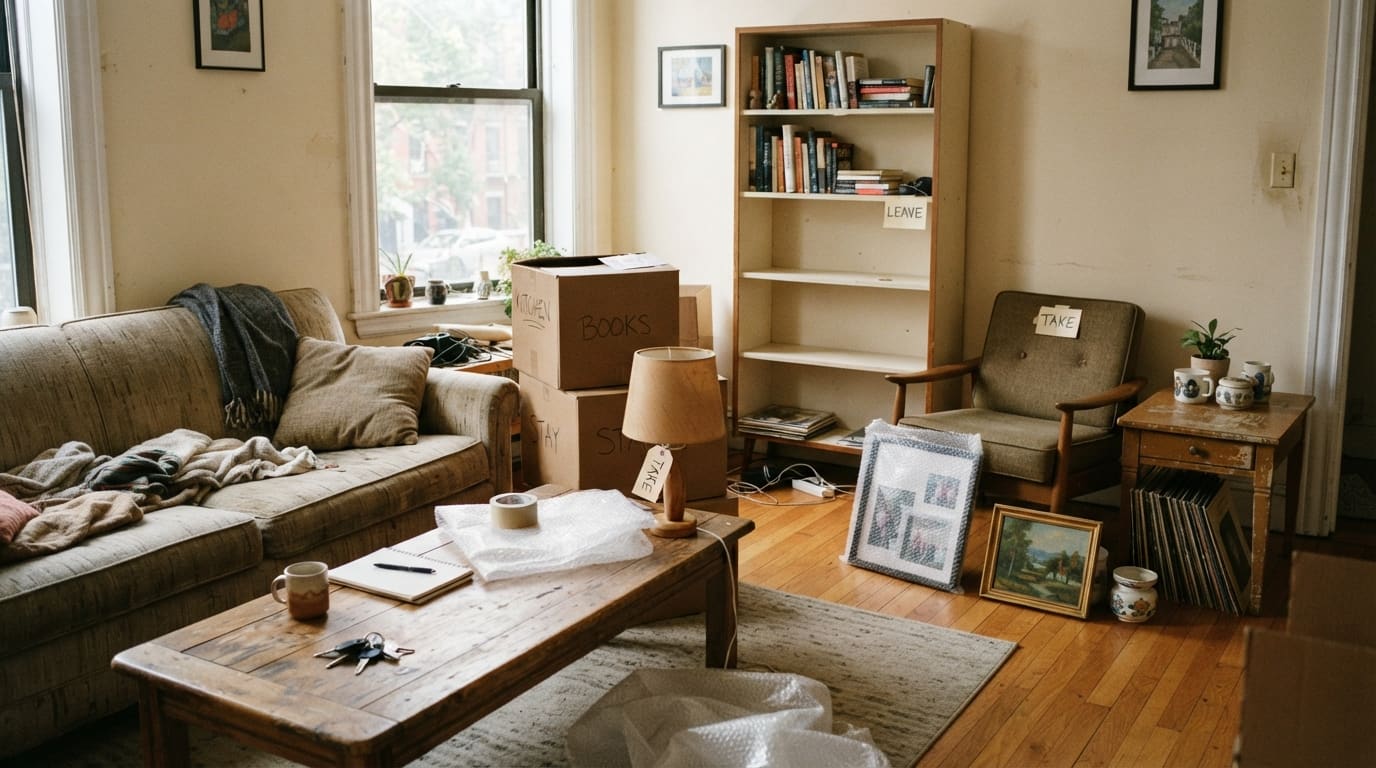
Every move comes with the same question, usually asked while standing in front of a large wardrobe: is this coming?
The usual advice is to ask whether you love it or have used it in the past year. That is a fine question for a box of kitchen gadgets. For furniture there is a more useful one to ask first: does it fit where you are going? A piece you love that blocks the bedroom door in the new place is not a piece you get to keep using.
So decide in this order.
1. Does it fit the new apartment?
Measure the piece, place it on a plan of the new rooms, and look at the gaps around it. It will land in one of three groups.
It fits with comfortable space around it. A walkway of about 3 ft (90 cm) on the main route through the room, doors that open fully, drawers you can pull out. Keep it and move on to the next piece.
It fits, but tight. The walkway is down to about 2 ft (60 cm), or a door only just clears it. Before deciding, try two things on the plan: turn it to stand against a different wall, and try it in a different room. A sofa that crowds the living room is sometimes right for a study.
It does not fit. No wall is long enough, or it blocks a door, a window or a radiator wherever you put it. This piece is not coming, however good it is.
The method for placing furniture on a plan is in Will my furniture fit in my new apartment?.
2. Can it get in?
A piece can fit the room and still not reach it. Check the route: front door, elevator, stair landings, hallway corners. Furniture that came apart to get into your current home will usually come apart again. A sofa in one piece, a large mattress or a solid wardrobe is the kind of thing to check against the doorway and the way in before you pay to move it.
3. Is it worth moving?
For everything that fits and can get in, weigh what moving it costs against what replacing it costs. A few things tip the balance:
- Size and weight. Movers and trucks are priced by volume and time. Large, heavy, low-value pieces cost the most to move for what they are worth.
- Whether it survives being taken apart. Solid wood furniture usually moves well. Some flat-pack furniture gets looser each time it is taken apart and put back together, so a piece that is already wobbly may not be worth the trip.
- Distance. Across town, taking a doubtful piece is cheap. Across the country, each piece has a real price.
- What replacing it involves. Money, and also the weeks without it while a new one is delivered.
- Whether you would buy it again. If you were furnishing the new place from nothing, would this piece be on the list?
4. Does it work with what else is coming?
This is the part only you can judge. If you are replacing the sofa, do the armchairs you are keeping still work next to the new one? If the dining table stays, which chairs go with it?
If two of you are combining furniture, moving in together covers that case. Either way, it is easier to see than to imagine. Take a photo of each piece you are keeping and put it on a furniture moodboard next to the pieces you are thinking of buying. In Nooked you can upload your own photos alongside products from any shop, so the old and the new are on one board.
The pieces that most often cause trouble
When the new apartment is smaller or a different shape, these are the ones to check first:
- Large sofas and sectionals. They need the longest free wall, and an L-shape only works in one corner.
- Wardrobes. Height under the ceiling, plus about 2 ft (60 cm) in front for the doors.
- Dining tables. The table fits, and then the chairs need about 2 ft (60 cm) behind them to be pulled out.
- Beds. A larger bed in a smaller bedroom can leave no way to get in on one side.
- Desks. They often end up wherever the sockets and the internet connection are.
What to do with the pieces that are not coming
Start early. Selling furniture takes longer than expected, and the week before a move is the worst time to be arranging pickups.
- Sell what has value, four to six weeks before the move. Put the measurements in the listing. Buyers have the same problem you do.
- Give away what is usable but would not sell quickly. Friends, neighbors and local giving groups move faster than buyers.
- Donate to a charity that collects furniture, and book the pickup well ahead.
- Dispose of what is left through your city's bulky waste collection, which often needs booking too.
When you do replace something
Buying a replacement is the one moment in a move where you get to pick the size. You know the wall it has to stand against and the gaps it has to leave, so shop with those numbers.
If you are choosing between two or three, compare them side by side with their sizes and whether each one fits the room. And if the piece you are replacing is the one you were unsure about, put both on the plan: the one you own and the one you might buy. Seeing them in the same spot usually settles it.
Related guides
All guides