Why Your Neutral Room Feels Cold: The Hard-and-Soft Texture Rule
Tactile Contrast & Neutral Textures
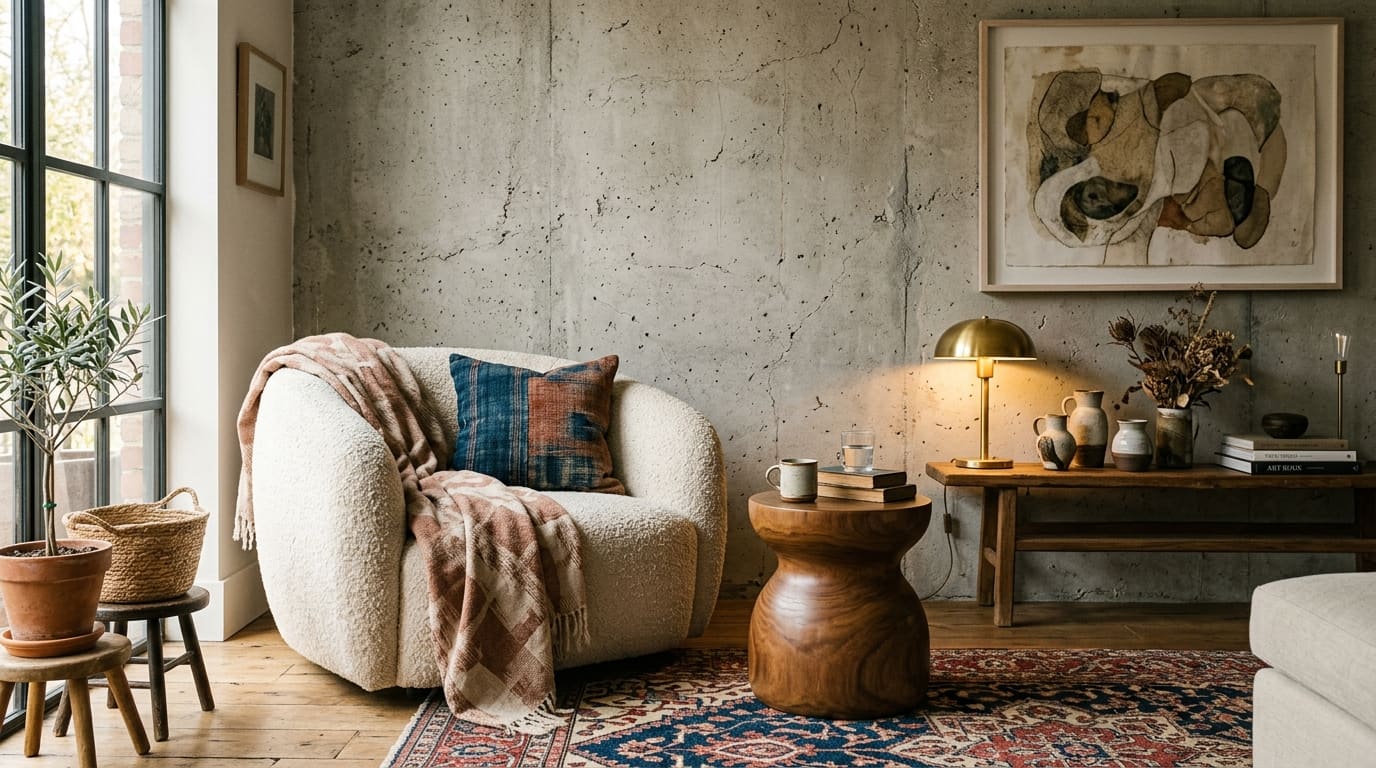
A neutral room doesn't have to feel cold. When a room uses similar colors everywhere, the difference often comes down to texture.
Smooth, hard surfaces can feel very different when they're balanced with soft, woven or irregular materials.
Mix Hard and Soft Textures
Try combining:
- Hard surfaces: glass, stone, tile, metal and polished wood
- Soft surfaces: linen, wool, cotton, velvet and bouclé
- Natural textures: timber, rattan, jute, wicker and woven materials
You don't need to use every texture. Even a few contrasting materials can give a neutral room much more depth.
Common Mistakes to Avoid
- Making everything smooth: Similar finishes across furniture, curtains and flooring can make a room feel visually flat.
- Using only hard materials: Glass, metal and stone benefit from softer elements around them.
- Adding texture without purpose: Too many competing patterns and textures can create visual noise instead of warmth.
Pro Tip: Before buying another piece of furniture, try adding texture with something inexpensive: a throw, cushion, basket or rug. Sometimes the room doesn't need more furniture at all.
Frequently Asked Questions
Can different fabrics be mixed?
Absolutely. Linen, velvet, wool and cotton can work very well together when they share a compatible color palette.
Build Your Texture Palette
Use the Nooked Moodboard to bring rugs, curtains, furniture and other finishes together and see whether your room has enough contrast in texture.
All guides