Why Your Room Feels Cluttered: The Power of Negative Space
How empty space improves room layout
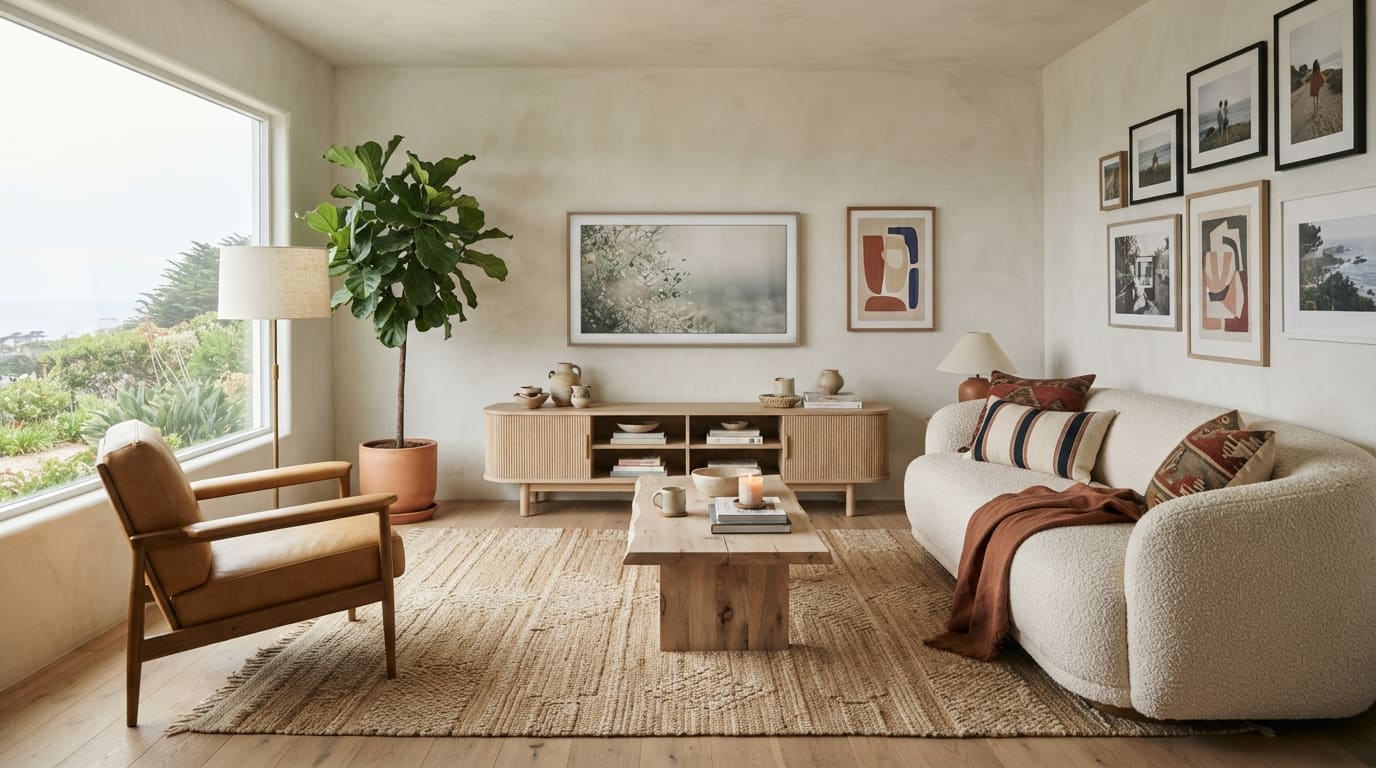
Empty space isn't wasted space.
Leaving room around furniture gives people somewhere to walk, makes important pieces easier to see and prevents a room from feeling overcrowded.
Good interior design isn't about filling every available corner. It's about creating a comfortable balance between furniture and breathing room.
Where Negative Space Matters Most
Walking Paths
As a general starting point, aim for around 75–90 cm (30–36 in) for important walking routes.
You may need more or less depending on the room and how heavily the path is used.
Around a Coffee Table
Around 35–45 cm (14–18 in) between a sofa and coffee table is a useful starting point for comfortable seating.
Between Furniture Pieces
Furniture shouldn't necessarily be pushed tightly together.
Leave enough space for people to sit, stand and move comfortably between pieces.
Don't Fill Every Empty Corner
An empty corner isn't automatically a problem.
Before buying another piece of furniture, ask:
Does this space need something, or does it need to remain empty?
Sometimes moving an existing chair, rug or lamp creates a better result than adding something new.
Pro tip
Try rearranging what you already own before buying anything new. A room can feel completely different simply by changing the position of a sofa, rug or lamp.
Check Your Clearances in Nooked
This is one of the places where Nooked is particularly useful.
Build your room to scale, add your furniture and move pieces around to see where items overlap or where clearance becomes too tight.
Plan Your Room in Nooked →
All guides